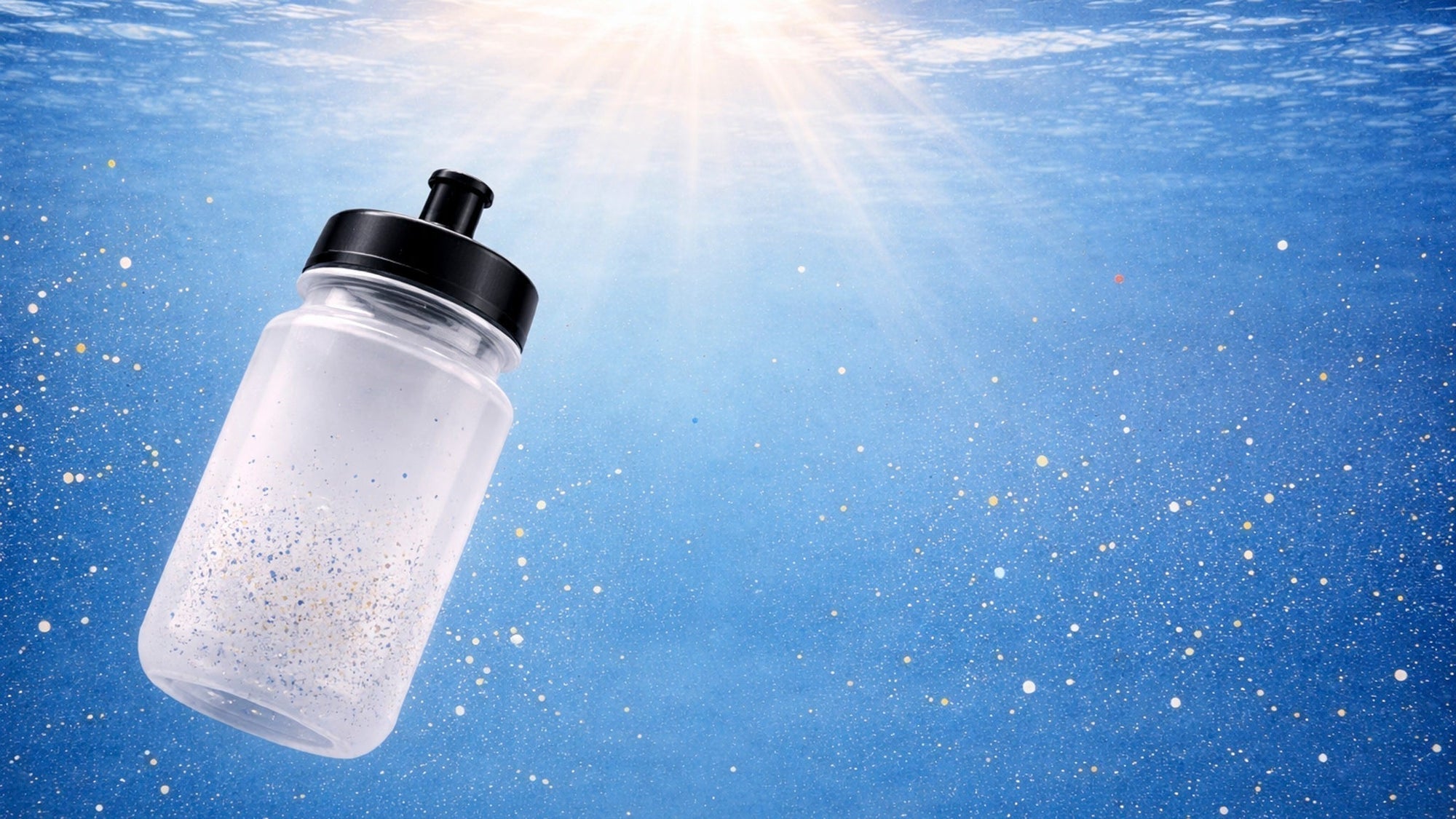
Underestimated danger: Chemicals during sports & cycling
Our sense of smell and taste usually warns us of unwanted substances.
But what about plastic bicycle bottles?
Researchers at the University of Copenhagen investigated this question and examined whether and how many chemicals dissolve from the sports bottles into drinks.
In their study, they filled water into new, common reusable sports bottles and left it for 24 hours before analyzing it for chemical residues. The result is alarming: over 400 different chemical compounds were detected that were not previously in the drink.
While BPA is now avoided in many bottles, largely unexplored substitutes are causing concern. The study leaders explain that the toxicity of around 70% of these substances has not yet been clarified. Particularly problematic are so-called photoinitiators, which are considered to be hormonally active and potentially carcinogenic. In addition, they found plasticizers, antioxidants and release agents that are used in plastic production. Many of these substances can unintentionally arise through reactions with other chemicals.
Does the dishwasher help?
The study clearly refutes the assumption that a wash cycle effectively cleans the bottles. After washing in the machine, the researchers found many times more substances, a total of 3500 different chemical compounds – many of them previously unknown. Experts therefore strongly advise against cleaning sports bottles in the dishwasher, as this can promote the release of harmful substances.
Selina Tisler, postdoctoral researcher and first author of the study at the Department of Plant and Environmental Sciences at the University of Copenhagen, explains: “After rinsing, many chemicals from the bottle itself remain in the water. The most toxic substances we identified even appeared after cleaning in the machine – because washing attacks the plastic and promotes the release of the substances.”
Microplastics in the brain:
New research results from Matthew Campen and his team at the University of New Mexico show that microplastics have been detected not only in organs such as the liver and kidneys, but also in particularly high concentrations in the brain. Plastic particles were found in all 52 of the corpses they examined, in some cases in amounts equivalent to the weight of a small plastic spoon. This could also indicate a link between microplastics and the development of dementia.
The particles detected in the brain were mostly smaller than 0.2 micrometers and consisted mainly of polyethylene – a material used in many everyday objects. Due to their small size, they can cross the blood-brain barrier. It is also worrying that the amount of microplastics in tissue samples from 2024 was significantly higher than in samples from 2016. This suggests that micro- and nanoplastics are spreading rapidly in the environment.
20 times more microplastics from plastic bottles
According to the study, consuming water from plastic bottles can significantly increase the intake of microplastic particles – over 20 times more than using tap water. According to an analysis of 21 studies, glass bottles also contain more plastic particles than tap water, possibly due to the bottling process.
Heating food in plastic containers – especially in the microwave – releases significant amounts of microplastics and nanoplastics. Even long-term storage at room temperature or in the refrigerator can cause particles from the plastic to transfer into the food. The use of refillable metal containers is therefore recommended as an effective measure to reduce plastic exposure.
What alternatives are there?
“We pay so much attention to low pesticide levels in our drinking water, but as soon as we fill it into a plastic bottle, hundreds or even thousands of substances are added. Even if we do not yet know exactly how these chemicals affect our health, I would rather use a glass or metal bottle in the future.“ – says Jan H. Christensen, Professor at the Department of Plant and Environmental Sciences at the University of Copenhagen.
However, in sports and cycling, glass and metal bottles are often impractical. They are heavier, cannot be squeezed, and pose a greater risk of injury in the event of a fall.
The startup KEEGO offers an innovative solution:
Their bottle consists of several layers, with the inner layers made of pure yet squeezable titanium. This combines the advantages of a lightweight, flexible plastic bottle with the purity and neutral taste of a metal bottle—all without any unwanted chemicals.
Sources:
-
University of Copenhagen: "Chemical leaching from reusable plastic bottles"
-
University of New Mexico: "Accumulation of Microplastics in Human Brain Tissue"
-
Brain Medicine: "Removal of microplastics from the human body: What does the evidence tell us?"
-
Nature Medicine: "Bioaccumulation of microplastics in the brains of deceased individuals."
-
Science Advances: "Microplastics in the bloodstream can induce cerebral thrombosis by causing cell obstruction and lead to neurobehavioral abnormalities."
-
Environmental Science & Technology: "Human Consumption of Microplastics."
-
International Journal of Environmental Research and Public Health: "Occurrence of Microplastics in Tap and Bottled Water: Current Knowledge."
-
Environmental Science & Technology: "Plastic Teabags Release Billions of Microparticles and Nanoparticles into Tea."
-
Environmental Science & Technology: "Assessing the Release of Microplastics and Nanoplastics from Plastic Containers and Reusable Food Pouches: Implications for Human Health."
Note: The content of this article is intended solely for general informational purposes and does not constitute medical advice. It is not intended to diagnose, treat, cure, or prevent any disease. If you have any health questions or concerns, you should seek medical advice.